
Printed Labels and Stickers matched across your whole range
Most businesses end up needing both: labels that carry product information and stickers that carry the brand. Ordered from different places, they rarely match. This page explains where a label ends and a sticker begins, and how to plan both together so your jars, boxes and mailers look like one family.
- Product labels and brand stickers planned in one go
- Colour kept consistent across different materials
- Every design reviewed before a single proof is sent
Free quote · 10-12 working days from the day you approve your digital proof
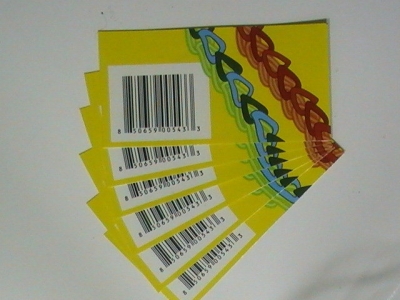 One matched set
 - PDF proof firstNothing prints until you approve it
- Free artwork reviewYour file checked before production
- Custom sizes & shapesMade to your dimensions
- UK-wide delivery10-12 working days from proof approval
Labels and stickers that work together
A typical product business combines several of these. Each page goes deeper into one piece.
Custom labels
Information-led labels for jars, bottles and tubs.
View Custom LabelsPackaging stickers
Seals and brand marks for boxes and mailers.
View Packaging StickersProduct stickers
Small brand marks for the goods themselves.
View Product StickersRoll labels
Labels wound on rolls for busy packing days.
View Roll LabelsLogo stickers
Your mark on bags, tissue and giveaways.
View Logo StickersLabel or sticker? How to plan both
The two words overlap, but the jobs are different. Sorting each item into the right group first makes material, size and format decisions much easier.
Why plan printed labels and stickers together?
In print terms, labels and stickers are made the same way: artwork printed onto a material with an adhesive back. The difference is purpose. A label identifies and informs, while a sticker decorates, seals or promotes. A jam jar needs a label; the kraft box it ships in might carry a sticker.
When both are designed and ordered at the same time, the logo sits at the same scale, the brand colours come from the same file and the fonts agree. Customers notice that consistency, even if they could not say why a brand feels put together.
Planning together also exposes gaps early. You may realise that the lid needs a small seal to match the front label, or that a thank-you sticker would finish the unboxing, before the first batch has gone out.
Popular combinations of labels and stickers
Businesses usually pair items like these:
- Front label plus lid seal – a jar or tin with product details and a matching top sticker.
- Bottle label plus neck sticker – information on the body, a flash or batch mark higher up.
- Product label plus mailer sticker – branded shipping boxes that echo the product inside.
- Ingredient label plus offer sticker – a permanent label with a short-term promotion over the top.
- Address label plus thank-you seal – for online shops packing orders by hand.
Materials and formats for each job
Labels that face fridges, oils or bathrooms tend to need vinyl, while labels on dry goods and paperwork often suit paper, which is easy to write on. Stickers that customers keep or that live outdoors lean towards vinyl as well.
Format is worth deciding per item. Labels applied by the hundred on a packing bench are quicker from a roll, whereas stickers slipped into orders or handed out at a stall are easier as singles or sheets.
Shapes can differ too. A rectangular information label and a circular brand seal can share a design language without sharing an outline.
Keeping colour consistent across materials
The same brand colour can look different on paper, white vinyl and clear film. Paper absorbs a little ink and softens tones; white vinyl keeps them bright; clear film lets the surface underneath change the result.
If your range mixes materials, tell us which items sit next to each other on a shelf or in a box. We can then flag where a colour is likely to shift and suggest adjustments before you approve the proofs.
Supplying all artwork in CMYK at 300 DPI, or as vector files, from a single master brand file is the simplest way to keep everything aligned.
How a matched set helps your brand
A small business with coordinated labels and stickers looks established from the first order. Retail buyers, market customers and online shoppers all read that consistency as a sign that the products inside are cared for.
It also makes future changes simpler. When the whole set shares one design system, a new flavour or scent only needs a new label variation rather than a rethink of your packaging.
Why businesses choose AStickerPrinting for labels and stickers
We look at your labels and stickers as a set, pointing out where one item needs a tougher material or a different format than the rest. You receive a PDF proof for each design, and nothing goes to print until you have signed them off.
Build your label and sticker set
Each item in the set can have its own specification.
Send us your full list of labels and stickers
List every item you need, where each one goes and roughly how many, and upload your artwork. We will suggest materials and formats and quote the set.
- Share your requirements
- Approve your PDF proof
- Printed & delivered UK-wide
Why UK businesses order Printed Labels and Stickers from us
You approve every job first
We send a PDF proof for your approval before anything is printed, so size, colour and layout are signed off by you.
Made to your specification
Size, shape, material and finish are set for each order rather than chosen from a fixed list.
A timeline you can plan around
Typical turnaround is 10-12 working days, counted from the day you approve your digital proof. Ask about faster arrangements before you order.
Printed Labels and Stickers questions, answered
What is the difference between a label and a sticker?
Physically there is little difference. The distinction is the job: labels identify a product or carry information, while stickers decorate, seal or promote. Tell us what each item is for and we will suggest the right build.
Can labels and stickers be quoted in one request?
Yes. List each design with its size, material and quantity, and we will price them together so you can see the whole set in one place.
Can a label and a sticker use different materials?
Yes. A product label might need vinyl to cope with moisture, while a box seal in the same range works perfectly well on paper. Each item is specified separately.
Will my brand colour look identical on every material?
Colours shift slightly between paper, white vinyl and clear film. We flag noticeable differences at proof stage so you can decide whether to adjust the artwork for any material.
Should labels come on rolls and stickers on sheets?
Not necessarily. Choose rolls for anything applied in quantity and sheets or singles for items handed out or packed individually. Many businesses mix formats within one order.
Do you check the information printed on my labels?
We review artwork for print quality, such as resolution, bleed and text size. The accuracy of ingredients, warnings and legal wording remains your responsibility, so check those carefully on your proof.
How long does a combined label and sticker order take?
Once every proof in the set is approved, production takes 10–12 working days. Approving all designs together keeps the items on the same schedule.
- Quality checkedArtwork reviewed and proofed before print
- Clear turnaround10-12 working days from approval
- Tailored quotesPriced for your size and quantity
- Design supportFree artwork review on every order