
Heavy Duty Stickers built for knocks, weather and cleaning
Heavy duty stickers are specified for places where ordinary stickers give up: forklift trucks, wheelie bins, tool cases, site equipment and outdoor machinery. The difference lies in the film thickness, the laminate and an adhesive matched to the surface. Tell us what the sticker will face and we will recommend a construction for it.
- Thicker vinyl with protective laminate options
- Adhesive matched to metal, plastic or painted surfaces
- Suited to workshops, sites, vehicles and outdoors
Free quote · 10-12 working days from the day you approve your digital proof
 Built for tough jobs
 - PDF proof firstNothing prints until you approve it
- Free artwork reviewYour file checked before production
- Custom sizes & shapesMade to your dimensions
- UK-wide delivery10-12 working days from proof approval
Explore stickers for demanding conditions
Heavy duty needs differ by setting. These categories focus on specific environments and messages.
Outdoor sticker printing
Stickers planned for rain, sun and frost.
View Outdoor Sticker PrintingLaminated stickers
A protective layer over the printed surface.
View Laminated StickersWaterproof stickers
Vinyl stickers that cope with wet conditions.
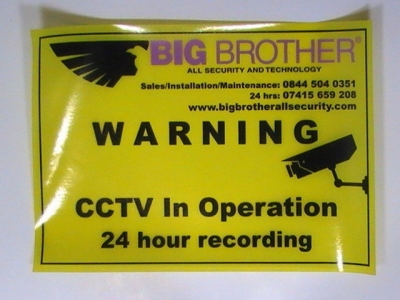
View Waterproof StickersWarning stickers
Hazard messages for equipment and sites.
View Warning StickersNumbering stickers
Asset, bin and fleet numbers.
View Numbering StickersTruck stickers
Graphics for lorries, vans and plant.
View Truck StickersSpecifying stickers that stand up to hard use
There is no single heavy duty sticker. The right build depends on what it sticks to, what rubs against it and what it gets cleaned with.
Why choose heavy duty stickers?
A standard sticker on a site generator or a council wheelie bin can scuff, peel or become unreadable surprisingly quickly. When the sticker carries an asset number, operating instruction or company name, losing it creates real problems.
Heavy duty construction reduces that risk. A thicker film resists tearing, a laminate shields the print from abrasion and chemicals, and an adhesive chosen for the surface keeps edges down.
It also saves time. Replacing damaged stickers across a fleet or a warehouse is a job nobody wants, so specifying properly at the outset is usually the better use of budget.
Popular uses for heavy duty stickers
Heavy duty stickers are specified for:
- Plant and machinery – company branding, controls and service information.
- Bins and containers – house numbers, collection information and waste streams.
- Tool cases and equipment – ownership marks and asset numbers that deter loss.
- Warehouse racking and vehicles – bay references, fleet numbers and handling notes.
- Outdoor and marine kit – branding on generators, trailers, kayaks and water sports equipment.
Materials, shapes and sizes
Vinyl is the starting point for most heavy duty jobs because it flexes with the surface and resists moisture. A laminate over the print adds a sacrificial layer that takes scratches and cleaning so the ink underneath does not.
Gloss laminate is easy to wipe clean; matte laminate hides light scuffing and reduces glare on equipment used under strong lights. Tell us about oils, fuels or cleaning chemicals, as these affect which construction we suggest.
Rectangles with rounded corners are the most robust shape, because sharp corners are the first place a sticker lifts. Size the sticker so that it sits on a flat panel rather than across seams, rivets or bends.
Surface preparation and application
Adhesion fails far more often because of the surface than the sticker. Degrease metal and painted surfaces with a suitable cleaner, remove dust and rust, and let everything dry fully before applying.
Some plastics are naturally hard to stick to. Polypropylene and polyethylene, used for many bins, crates and tool boxes, have slippery low-energy surfaces, and textured or powder-coated finishes reduce contact. Let us know the material so we can advise.
Apply in mild, dry conditions rather than in freezing weather, press firmly across the whole sticker with a squeegee, and give the adhesive time to settle before exposing it to washing or rough handling.
How heavy duty stickers help your operation
Clear, lasting identification keeps equipment where it belongs. Tools and cases marked with a company name and number are easier to track across sites and less tempting to walk off with.
Legible instructions and warnings on machinery support safe working, while consistent branding on plant and vehicles shows clients a well-run business.
Stickers that stay intact also keep a workplace looking cared for, which matters to staff, visitors and anyone inspecting the premises.
Why customers choose AStickerPrinting for heavy duty stickers
Before quoting we ask practical questions about surfaces, chemicals, temperature and abrasion, because a heavy duty sticker is only as good as its specification. Your artwork is reviewed free, and a PDF proof confirms sizes and wording.
Production runs to 10–12 working days after proof sign-off, and we deliver to depots, workshops and offices throughout the UK. Where your stickers carry safety wording, you remain responsible for checking it suits your workplace.
Customise your heavy duty stickers
Every layer of the sticker can be chosen for the conditions it faces.
Describe the conditions, we will suggest the build
Tell us the surface, the environment and what the sticker must survive, along with size and quantity. We will recommend a construction and quote.
- Share your requirements
- Approve your PDF proof
- Printed & delivered UK-wide
Why UK businesses order Heavy Duty Stickers from us
You approve every job first
We send a PDF proof for your approval before anything is printed, so size, colour and layout are signed off by you.
Made to your specification
Size, shape, material and finish are set for each order rather than chosen from a fixed list.
A timeline you can plan around
Typical turnaround is 10-12 working days, counted from the day you approve your digital proof. Ask about faster arrangements before you order.
Heavy Duty Stickers questions, answered
What makes a sticker heavy duty?
A combination of thicker vinyl, a protective laminate over the print and an adhesive suited to the surface. Together they help the sticker resist abrasion, moisture and cleaning.
How long will heavy duty stickers stay on?
That depends on the surface, the preparation and the conditions, so we do not quote a fixed lifespan. Clean application, a suitable laminate and avoiding seams and sharp bends make the biggest difference.
Can heavy duty stickers go on wheelie bins?
Yes, bins are a common use. Many bins are made from low-energy plastic, so clean them thoroughly and let us know the bin type so we can suggest a suitable construction.
Will they resist oil and chemicals?
Laminated vinyl copes with many workshop conditions, but some solvents and fuels attack films and adhesives. Tell us which substances are involved and we will advise honestly.
Can you print sequential numbers on heavy duty stickers?
Tell us the numbering sequence you need for assets, bins or vehicles when you request a quote, and we will confirm how it can be set up for your order.
Are heavy duty stickers suitable outdoors?
Vinyl with a laminate suits outdoor use. Strong sunlight over long periods can fade any printed colour, so placing stickers away from constant direct sun helps.
How long does production take?
Heavy duty orders are completed within 10–12 working days after you approve the PDF proof. For fleet or site rollouts, share your schedule so the proof stage does not hold things up.
- Quality checkedArtwork reviewed and proofed before print
- Clear turnaround10-12 working days from approval
- Tailored quotesPriced for your size and quantity
- Design supportFree artwork review on every order